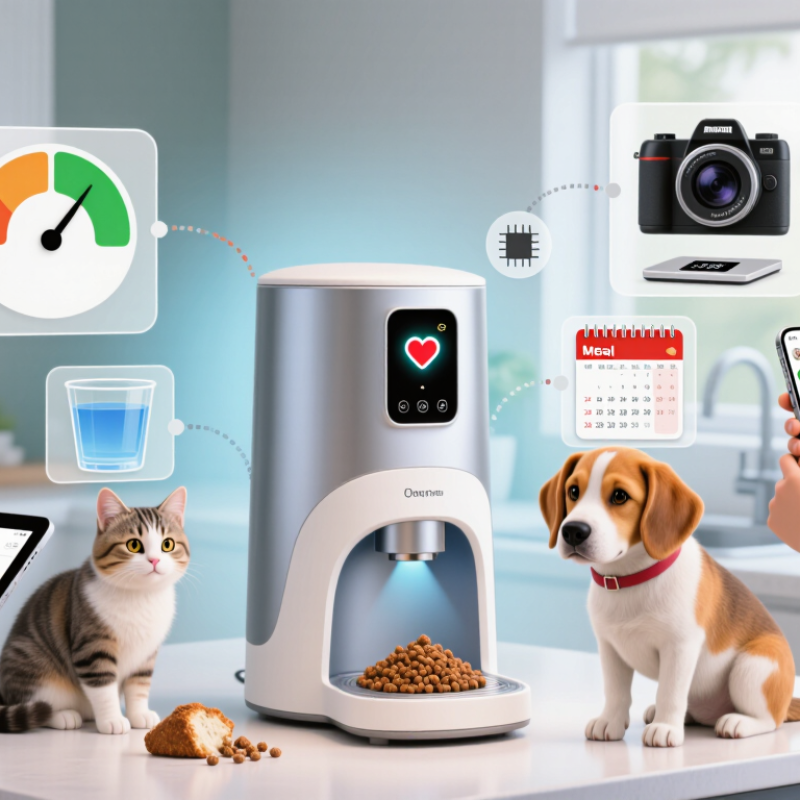
Pet feeding is changing from a simple bowl into a connected care system. Modern feeders can measure portions, schedule meals, and send alerts when routines change. Some models even recognize individual pets through microchip or camera technology. Yet convenience should never replace attentive ownership.
So, what is the future of smart pet feeding technology? It will likely combine reliable sensors, veterinary guidance, and more personalized nutrition plans. A feeder may notice that a cat leaves half its dinner, or that a dog eats unusually fast. That small detail could encourage an owner to check for stress, dental pain, or digestive problems. Technology can reveal patterns. It cannot diagnose every problem.
The strongest systems may connect feeding records with activity, weight, hydration, and health data. Owners could receive practical prompts, such as reducing treats or arranging a veterinary visit. However, accuracy remains a concern. Sensors can misread portions, batteries can fail, and automated schedules may conflict with medical diets. I have found that simple routines often work better when technology is confusing. Human judgment still matters.
Future devices should therefore prioritize safety, transparent data practices, easy cleaning, and dependable backup options. Manufacturers need to explain how measurements are made and when users should seek professional advice. Veterinarians, engineers, and experienced pet owners should shape these products together. The goal is not to remove care from feeding. It is to make everyday care more informed, consistent, and responsive to each animal’s real needs.
What Is the Future of Smart Pet Feeding Technology?
Smart pet feeding technology refers to connected devices that manage a pet’s meals with greater accuracy and consistency. Its core functions include automatic scheduling, portion control, food-level monitoring, and feeding records. Some systems also use cameras or weight sensors to identify eating patterns. This information can help owners notice sudden appetite changes, missed meals, or unusual feeding speed.
A well-designed feeder may release measured portions at fixed times, even when an owner is away. It can support pets with weight-management plans or strict dietary routines. However, the technology is not flawless. A blocked dispenser may delay food, while an inaccurate scale may deliver the wrong amount. Wet food also requires careful storage and cleaning. Feeding data should support professional veterinary advice, not replace it. I would still check the bowl, device, and pet every day.
Tips: Choose a feeder with clear portion settings and a reliable backup option. Test several meals before regular use. Keep cables away from chewing pets. Clean food-contact parts frequently, and compare digital records with the actual food consumed. Privacy settings deserve attention too, especially when cameras collect activity data. Some convenience can create false confidence.
What Is the Future of Smart Pet Feeding Technology?
Evolution from Automatic Feeders to Intelligent Feeding Systems
Automatic feeders once offered simple timing and portion control. They released food at fixed hours, even when owners were away. Intelligent feeding systems now respond to a pet’s changing needs. They can measure portions, track eating speed, and record missed meals. Some systems use cameras or weight sensors to identify feeding patterns. This creates a clearer daily picture than an empty bowl.
The useful shift is personalization. A system may adjust feeding plans according to age, weight, activity, and dietary instructions from a veterinarian. It can also send an alert when a cat eats unusually fast or ignores breakfast. Small details matter. A slow motor, stable bowl, and accurate scale can prevent many mistakes. Yet technology should support professional care, not replace it.
Smart systems are not perfect. A camera may confuse two similar pets, especially in a busy home. Internet failures can interrupt notifications. Portion estimates may also become unreliable when food size changes. These weaknesses deserve regular human checks. Owners should compare stored data with the bowl, the pet’s body condition, and veterinary advice. The future may bring better prediction, but responsible feeding still needs observation, patience, and occasional correction.
Smart pet feeding technology is moving beyond simple timed food release. Connected feeders now combine weight sensors, cameras, and mobile alerts. A load cell can measure each portion within a few grams. This helps owners notice sudden appetite changes earlier. However, feeding data cannot replace veterinary advice. It only provides useful evidence for a professional discussion.
Artificial intelligence will improve meal recognition and feeding schedules. Cameras may identify individual pets by appearance or collar tags. This prevents one animal from taking another’s food. Adaptive software can adjust portions using age, weight, activity, and feeding history. It must remain transparent. Owners should be able to review why a portion changed. Otherwise, convenience may hide an important mistake.
Data protection will become equally important. Secure connections, limited data collection, and clear permission settings should guide product design. Reliable systems also need backup batteries and offline feeding controls. A network failure should not interrupt a pet’s routine. I still question whether every household needs advanced automation. Some animals may respond better to simple, familiar meals. Human observation remains essential, especially when a pet eats less, drinks more, or behaves unusually.
Smart pet feeding technology is moving from simple timers toward connected nutrition management. The American Pet Products Association reported US pet industry spending of $147 billion in 2023, with spending projected to reach $150.6 billion in 2024. This growth supports demand for devices that measure portions, record feeding times, and send alerts when a bowl remains untouched.
The benefits are practical. A connected feeder can divide meals into smaller portions, helping owners manage weight and reduce overeating. Feeding records may also help veterinarians identify appetite changes earlier. Grand View Research projects double-digit growth for the global smart pet feeder market through 2030, reflecting wider interest in monitored pet care. Yet convenience is not clinical accuracy. A sensor may misread food volume, especially with irregular kibble.
Small errors matter.
Connectivity creates other concerns. Owners must protect feeding data, maintain secure accounts, and plan for power or network failures. A missed meal could result from an empty hopper, a blocked dispenser, or a software fault. Professional guidance remains necessary for pets with diabetes, kidney disease, allergies, or changing medication needs. The device can support care, but it cannot replace observation. I would also question whether every alert improves welfare; excessive notifications may encourage anxious decisions. The most reliable systems will combine transparent measurements, offline feeding schedules, washable food paths, and clear records that veterinarians can actually interpret.
| Technology or Data Dimension | Evidence-Based Current Data | Future Connected Capability | Potential Benefit | Main Challenge | Key Performance Measure |
|---|---|---|---|---|---|
| Portion and calorie control | Resting energy requirement can be estimated with the veterinary formula: RER = 70 × body weight in kilograms0.75. Daily maintenance needs vary according to age, activity, reproductive status, health, and body condition. | Feeding systems can combine body weight, activity, meal history, and veterinary targets to calculate adaptive portions instead of relying only on fixed serving sizes. | More consistent calorie delivery and improved support for weight-management plans. | Energy formulas are starting points rather than individual prescriptions. Over-automation may cause inappropriate feeding if health status changes. | Difference between prescribed daily calories and calories actually dispensed; body-weight trend over time. |
| Meal scheduling | Many dogs and cats benefit from regular feeding routines. Meal frequency should be adjusted for age, medical needs, household schedules, and veterinary advice. | Connected feeders can schedule multiple small meals, pause feeding, and send alerts when a meal is missed or repeatedly delayed. | Improved routine consistency and easier management of multi-meal diets. | Power outages, network failures, incorrect time settings, and mechanical blockages can interrupt feeding. | On-time meal rate, missed-meal alerts, backup duration, and feeder blockage frequency. |
| Weight monitoring | Body weight alone does not fully describe nutritional status. Body-condition scoring and veterinary examination are also important for detecting excess fat or muscle loss. | Smart feeding platforms may combine connected scales, periodic body-condition assessments, and feeding records to identify gradual changes. | Earlier recognition of weight gain, weight loss, or non-adherence to a diet plan. | Home scales may be affected by movement, posture, flooring, and inconsistent measurement conditions. | Weekly weight trend, measurement repeatability, and percentage change from the veterinary target range. |
| Water intake and hydration | Typical daily water needs are often estimated at approximately 50–60 mL per kilogram of body weight, although diet, temperature, activity, age, and illness can change requirements. | Connected water stations can track drinking frequency and volume, identify unusual patterns, and combine hydration data with feeding records. | Potentially faster detection of changes that may require veterinary attention. | Water intake varies naturally, and sensor readings can be distorted by evaporation, spills, multiple pets, or outdoor drinking. | Daily intake trend, drinking-event frequency, sensor accuracy, and abnormal-pattern alert rate. |
| Multi-pet identification | When several animals share a household, one pet may consume another pet’s food, making individual calorie tracking unreliable. | Pet identification can be combined with access control so that each animal receives only its assigned food and portion. | Better adherence to individualized diets and reduced food competition. | Identification errors may occur when pets move together, access the feeder simultaneously, or use an unrecognized feeding position. | Correct-identification rate, unauthorized access events, and portion variance by pet. |
| Dietary safety and food freshness | Dry food can absorb moisture, while opened wet food is perishable and requires appropriate storage and handling. Food should be protected from contamination and spoilage. | Future systems may monitor container temperature, humidity, opening time, remaining food, and cleaning intervals. | Lower risk of spoiled food, improved inventory visibility, and fewer feeding interruptions. | Temperature and humidity sensors do not directly confirm microbiological safety. Users still need to clean and inspect equipment. | Food-storage temperature, container humidity, time since opening, and cleaning compliance. |
| Health-data integration | Changes in appetite, thirst, body weight, stool, activity, and behavior can be clinically relevant, but none of these signals alone provides a diagnosis. | Connected systems may combine feeding data with activity trackers, veterinary records, and owner observations to create a longitudinal nutrition profile. | More complete information for veterinary consultations and individualized nutrition management. | Data may be incomplete, inaccurate, or interpreted without sufficient clinical context. Automated alerts should not replace professional diagnosis. | Data completeness, alert precision, veterinary review rate, and time from abnormal trend to professional follow-up. |
| Personalization by life stage | Growth, adulthood, senior status, pregnancy, lactation, and medical conditions can require different energy and nutrient strategies. Puppies and kittens generally need more energy per kilogram than healthy adults. | Algorithms can adjust reminders and feeding targets using age, weight, growth pattern, activity, and veterinary-defined nutritional goals. | More appropriate feeding recommendations across changing life stages. | Personalization requires reliable profile data and must account for breed size, disease, sterilization status, and food energy density. | Target adherence, growth-curve deviation, body-condition trend, and frequency of manual corrections. |
| Connectivity and reliability | Internet-connected devices depend on electricity, software, sensors, and communication networks. A connected feature is useful only if the basic feeding mechanism remains reliable offline. | Future feeders may use local fallback schedules, battery backup, self-diagnostics, and automatic synchronization after reconnection. | Greater continuity of care during network or power interruptions. | Hardware failure, cybersecurity risks, software updates, and compatibility problems can affect feeding access. | Offline operating time, successful delivery rate, fault-detection time, and recovery time after an outage. |
| Privacy and data governance | Connected feeding systems may collect household routines, pet identity information, location-related data, feeding behavior, and health-related observations. | Privacy-focused designs can minimize data collection, encrypt communications, provide access controls, and allow users to export or delete records. | Higher user trust and safer long-term use of connected nutrition services. | Weak passwords, unnecessary data retention, unclear consent, and third-party data sharing can expose sensitive information. | Encryption coverage, authentication strength, data-retention period, access-log visibility, and user consent controls. |
Smart pet feeding is moving beyond scheduled portions and basic timers. Future systems will build feeding profiles from age, weight, activity, breed traits, and medical guidance. A young, active dog may need more energy after a long walk. An older cat may need smaller meals and slower delivery.
Personalized technology could adjust portions as patterns change. It may notice unfinished food at 7:00 a.m., faster eating, or repeated drinking near the bowl. Predictive tools might then flag possible appetite changes before owners notice them. However, these systems should support professional care, not replace it. A sensor can identify unusual behavior, but it cannot diagnose pain, dental disease, or anxiety. Data quality also matters. A dirty bowl sensor or a missed outdoor meal can produce a wrong recommendation. That limitation deserves attention.
Tips: Keep weight records and review feeding data weekly. Confirm major changes with a veterinarian. Use measured portions, fresh water, and gradual diet adjustments. Treat predictions as useful signals, not final answers. Owners should also check the bowl, observe chewing, and notice mood changes. Sometimes, simple observation remains more reliable than an impressive dashboard. Future feeding will be most effective when algorithms, clinical knowledge, and daily human experience work together.
Projected share of smart-feeding systems supporting personalized and predictive functions, 2024–2028.
The forecast indicates a shift from basic scheduled dispensing toward adaptive portion control, health-aware feeding recommendations, predictive food-level alerts, and integration with veterinary or wellness data. Values represent estimated percentages of smart-feeding systems offering each capability.
It can record meal times, portion weights, and whether food remains untouched. Some load cells measure portions within a few grams. It is not perfect.
Records may reveal reduced appetite, overeating, or unusual feeding times. A bowl left full overnight can provide useful evidence for a veterinary discussion.
No. They provide measurements, not diagnoses. Professional guidance remains important when a pet eats less, drinks more, or behaves unusually.
Software may recognize individual pets and adjust portions using age, weight, activity, and feeding history. Owners should see why each portion changed.
Cameras or collar-based identification may recognize different animals. However, recognition can fail in poor lighting or during fast movement.
Irregular kibble may confuse sensors. A blocked dispenser, empty hopper, or software error can also interrupt a planned meal. Small errors matter.
The feeder should include backup batteries and offline controls. Feeding should continue even when the household network stops working.
Use secure connections, strong account protection, and limited data collection. Permission settings should be clear and easy to review.
Not necessarily. Some animals may prefer familiar meals and simple routines. Convenience can help, but constant alerts may create anxious decisions.
Smart pet feeding technology combines automated food dispensing with sensors, software, and connected devices to manage when, how much, and what pets eat. Early automatic feeders mainly followed fixed schedules, while modern intelligent feeding systems can monitor portion sizes, eating habits, hydration, and dietary routines. By linking data from feeding sensors, mobile applications, cameras, and health-monitoring tools, these systems can give owners clearer insight into daily pet nutrition and help maintain consistent care.
The question “what is the future of smart pet feeding technology” points toward more personalized and predictive nutrition management. Future systems may adjust meal timing and portions according to a pet’s age, weight, activity, preferences, and changing health indicators. They could also identify unusual eating patterns and provide early alerts for professional attention. However, challenges such as data privacy, device reliability, affordability, and the need for accurate nutritional guidance must be addressed. Overall, smart feeding is moving from simple automation toward responsive, individualized, and evidence-informed pet care.

PawEase Feeder