Can Automatic Pet Feeders Help With Weight Control?

Time:2026-10-16 Author:Ethan
0%

Can automatic pet feeders help with weight control? They can, but only when feeding amounts are measured accurately. A feeder may divide daily food into smaller portions, reducing frantic eating and begging between meals. It can also create a dependable routine when owners work long hours. However, convenience does not equal calorie control. An overflowing hopper can quietly add weight every week.

Dr. Ernie Ward, a veterinarian and founder of the Association for Pet Obesity Prevention, has said, “Obesity is the most common nutritional disorder affecting dogs and cats.” His observation highlights an important reality: portion size matters more than the machine itself. Owners should weigh dry food with a kitchen scale, check the label’s calorie information, and record treats. A cat receiving several snacks from different family members may still gain weight, even with a timed schedule.

The best approach combines an automatic feeder with regular monitoring. Measure the daily ration before loading it. Keep the feeder away from curious paws. Weigh the pet every two to four weeks, watching for gradual changes around the ribs and waist. A veterinarian can calculate suitable calories and investigate medical causes of weight gain. Multi-pet homes need extra care, because one animal may steal another’s meal.

Results may be uneven. Some feeders dispense inconsistent portions. Some pets simply wait beside them. That matters. A useful plan must fit the animal, household, and budget—not just the product description.
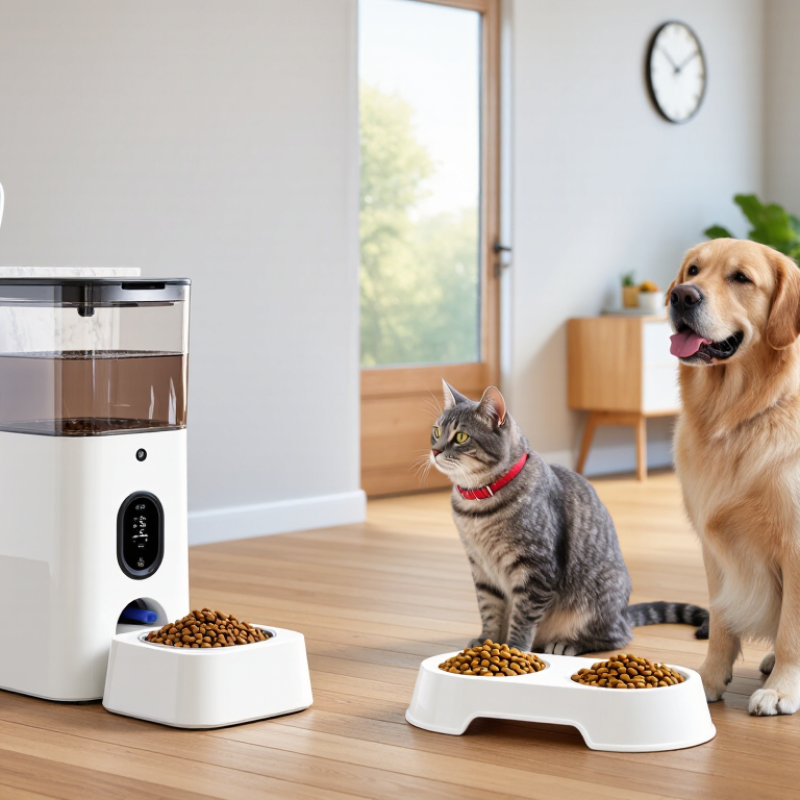
Can Automatic Pet Feeders Help With Weight Control?

How Automatic Pet Feeders Support Weight Control

Can automatic pet feeders help with weight control? Yes, but only when they dispense measured calories. The Association for Pet Obesity Prevention reported that 59% of cats and 55.8% of dogs in the United States were overweight or obese in 2022. Excess food is often difficult to notice. A filled bowl, extra treats, or a second dinner can quietly raise daily calories. An automatic feeder cannot fix these habits alone.

How automatic pet feeders support weight control is simple: they divide food into scheduled portions. Smaller meals may reduce begging and prevent long, uncontrolled grazing. They also create a clearer feeding record for owners and veterinary teams. The 2021 AAHA Nutrition and Weight Management Guidelines stress that calorie needs depend on species, body condition, age, activity, and health. The same portion may suit one pet but overload another. This is where many owners, including experienced ones, make mistakes. A feeder measures food, not health.

Tips: Weigh food with a kitchen scale. Record treats separately. Check your pet’s body condition monthly. Ask a veterinarian before reducing calories, especially for senior pets or animals with medical conditions. Review the schedule if food remains untouched or begging increases. Technology helps, but human follow-through remains the weaker link.

Key Features for Managing Pet Food Portions

Can Automatic Pet Feeders Help With Weight Control?

Automatic feeders can support weight control when they measure food accurately. The key feature is adjustable portion control, not the feeding schedule alone. Choose a model that dispenses food by weight or small measured units. Cup markings can be surprisingly inconsistent. A planned 30-gram breakfast is easier to monitor than “one scoop.”

Multiple daily meals may help pets that beg between meals. Smaller portions can also reduce rapid eating. Look for flexible timing, since every pet has different activity patterns. A quiet motor matters for nervous animals. A secure hopper helps prevent determined pets from stealing extra food. This happens more often than many owners expect.

Easy cleaning is essential. Old crumbs can collect around the chute and distort later portions. Check whether the bowl, lid, and food path can be removed safely. A low-food alert and battery backup provide useful protection during busy days. However, technology does not replace observation. Weigh your pet regularly, record leftover food, and adjust portions with veterinary guidance. A feeder may dispense correctly while the daily calorie target remains too high. That is the uncomfortable part. Treats, shared snacks, and another pet’s bowl can quietly cancel careful planning. Wet food also needs special attention because it can spoil if left out too long. Calibration should be checked occasionally, especially after moving or cleaning the unit.

Setting Feeding Schedules for Healthy Eating Habits

Automatic pet feeders can support weight control when they create a consistent feeding schedule. They do not manage weight by themselves. The Association for Pet Obesity Prevention’s 2022 survey estimated that 55.8% of dogs and 59% of cats were overweight or obese. That figure makes portion discipline more than a convenience.

Set daily calories with veterinary guidance, then divide them into measured meals. A cat that begs at dawn might receive four small portions instead of one large bowl. For dogs, scheduled meals can reduce grazing and make leftovers easier to track. Weigh dry food with a kitchen scale. Cups are convenient, but they can hide meaningful differences. Keep treats within the daily calorie allowance. Small snacks count.

Check body weight every two to four weeks. A feeder may release the wrong amount, especially when food settles unevenly. Clean its bowl and inspect the settings. The AAHA 2021 Nutrition and Weight Management Guidelines emphasize individualized calorie plans and regular reassessment. The first schedule may be wrong. Adjust it slowly with veterinary advice, particularly for senior pets or animals with medical conditions. Some pets still eat too quickly after a scheduled release. A puzzle bowl may help, but it is not a guaranteed fix. Track meal times, portions, treats, and body condition together. That record gives a veterinarian something concrete to evaluate.

Can Automatic Pet Feeders Help With Weight Control?

Setting Feeding Schedules for Healthy Eating Habits

Scheduled feeding can divide a pet’s measured daily calorie allowance into consistent portions. The chart shows how the portion size changes when a 600 kcal daily allowance is divided into different numbers of meals.

How to use this information: An automatic feeder can help deliver measured portions at consistent times, but weight control depends on the total daily calories, food type, activity level, and the pet’s health. The 600 kcal example uses simple arithmetic: daily calories divided equally among scheduled meals. A veterinarian should determine the appropriate daily calorie allowance for each pet.

Monitoring Calories, Weight, and Feeding Responses

Automatic pet feeders can support weight control, but only when calories remain visible. The Association for Pet Obesity Prevention estimated that 59% of dogs and 61% of cats were overweight or obese in its 2022 clinical survey. That figure makes portion accuracy more than a convenience. It becomes daily health management.

Measure each meal in grams, not by the feeder’s display alone. Portion sizes can vary with kibble shape and density. A kitchen scale helps expose that error. Record the food’s calories per gram, daily treats, and unfinished portions. The World Small Animal Veterinary Association recommends individualized nutrition plans, because age, activity, neutering status, and disease can change calorie needs. A feeder cannot judge those factors.

Weight should be checked weekly, under similar conditions. A sudden increase deserves attention, especially when appetite also rises. A sudden decrease may signal stress, illness, or an unsuitable schedule. Feeding responses provide useful clues: frantic eating, repeated begging, food refusal, or vomiting should be logged beside the meal time. The American Animal Hospital Association supports gradual weight reduction with veterinary supervision; targets often require adjustment rather than rigid automation. Some feeders also underdeliver small portions. I have found that “scheduled” does not always mean “measured.” Review the records with a veterinarian, then change portions carefully.

Limitations and Best Practices for Safe Weight Management

Can Automatic Pet Feeders Help With Weight Control?

An automatic pet feeder can support weight management, but it cannot manage weight alone. That distinction matters. A machine measures portions and keeps feeding times consistent. It does not judge body condition, appetite changes, or hidden treats. Some pets eat calmly from scheduled meals. Others rush, paw at the feeder, or remain hungry. In multi-pet homes, one animal may still steal another’s food. The feeder can also malfunction, lose power, or dispense inaccurate portions.

Use a kitchen scale to measure food before setting the schedule. Base the daily amount on veterinary guidance, current weight, age, activity, and health conditions. Divide that amount into smaller meals if it reduces begging. Do not reduce food sharply without professional advice. Safe weight loss should be gradual. Keep treats within the daily calorie allowance. Fresh water should remain available. Clean the food compartment regularly, especially with moist food.

Monitor progress every one or two weeks. Record weight, appetite, stool changes, and activity. A feeder may hide a problem if the pet stops eating or vomits nearby. Contact a veterinarian when weight changes unexpectedly. I once assumed consistent portions were enough, but activity levels changed the result. That mistake is easy to repeat. Adjustments may involve food type, exercise, meal timing, or medical testing. A feeder works best as one tool within a monitored care plan.

FAQS

Can an automatic feeder help control a pet’s weight?

Yes, if it measures portions accurately. A schedule alone cannot control weight. The calorie target may still be too high.

Why is weighing food better than using a scoop?

A kitchen scale gives a clearer amount, such as 30 grams. Cup markings and scoops can vary. Small differences matter daily.

How should daily meals be divided?

Set daily calories with veterinary guidance. Divide that amount into measured meals. Four small meals may help a cat that begs at dawn.

Can scheduled meals reduce overeating?

They may reduce grazing and make leftovers easier to track. Some pets still eat quickly. A puzzle bowl might help, but it is not guaranteed.

How often should a pet’s weight be checked?

Check every two to four weeks. Record weight, portions, treats, and leftovers. Adjust slowly with veterinary advice.

What extra food should owners remember?

Treats, shared snacks, and another pet’s bowl can cancel careful planning. Tiny snacks still count. This is easy to miss.

What feeder features support reliable feeding?

Look for adjustable portions, flexible timing, and a secure hopper. A quiet motor may comfort nervous pets. Low-food alerts and battery backup add protection.

How should the feeder be cleaned and checked?

Remove crumbs from the bowl, lid, and food path. Old food can distort later portions. Recheck calibration after cleaning or moving the feeder.

Is wet food suitable for automatic feeders?

Wet food needs extra care because it can spoil when left out. Remove leftovers promptly and follow safe storage guidance. I may not judge timing perfectly.

When is veterinary advice especially important?

Seek guidance for senior pets or animals with medical conditions. A veterinarian can review calories, body condition, and feeding records. Your first plan may be wrong.

Conclusion

Can automatic pet feeders help with weight control? They can be useful tools when combined with a balanced diet, regular exercise, and veterinary guidance. By dispensing measured portions at consistent times, these feeders can reduce overfeeding, discourage random snacking, and support healthier eating routines. Features such as portion adjustment, programmable schedules, and multiple daily meals make it easier to match food intake with a pet’s age, size, activity level, and nutritional needs.

Effective weight management also requires monitoring. Pet owners should track daily calories, observe changes in body condition and behavior, and weigh their pets regularly when appropriate. Feeding responses, such as persistent hunger or skipped meals, may indicate that the plan needs adjustment. Automatic feeders are not a complete solution: they may malfunction, be misused, or fail to account for treats and food given by other household members. Owners should clean the device, check its settings, keep fresh water available, and consult a veterinarian before making significant dietary changes.

Ethan

Ethan

Ethan is a seasoned marketing professional with a deep expertise in our company's innovative product line. With a passion for sharing knowledge and insights, he takes the lead in regularly updating our corporate blog, where he explores industry trends, product features, and effective marketing......