When pet owners face issues with their automatic pet feeders, the common frustration is summed up in one question: "why is my automatic pet feeder not dispensing food?" According to Dr. Jane Smith, a leading expert in pet care technology, “Understanding your feeder's mechanism is key to troubleshooting.” Many owners might overlook simple aspects, such as checking the power source or ensuring the food is properly loaded.
One of the frequent causes for malfunction is jammed food. Moisture can enter the feeder, clumping the kibble and preventing it from dropping. Regularly inspecting the food storage compartment for any blockages can prevent this. Owners should also consider the feeder's programming settings. Incorrect settings may lead to missed feeding times.
Another potential issue is power supply. A loose connection may stop the device from running. This often requires inspecting the power adapter and ensuring it's securely connected. Many problems stem from small oversights. Reflecting on these factors can improve the efficiency of automatic pet feeders and enhance the feeding experience for our animals.
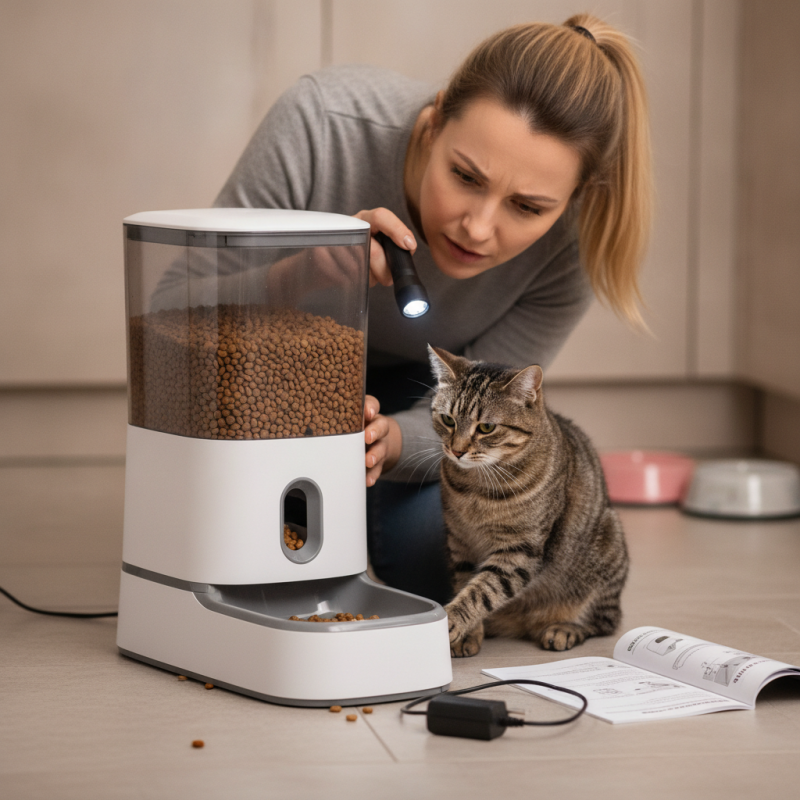
Automatic pet feeders can simplify feeding routines. However, many users encounter issues that prevent proper dispensing. Understanding the common mechanical problems can help diagnose these failures.
One of the frequent issues is jammed food. Pellets can get stuck in the chute, hindering flow. This could be due to moisture affecting the food or incorrect sizing of the pellets. Regularly check the feeder for clogs. Cleaning the dispensing area can often resolve this. Another concern is the motor malfunction. Motors can fail from wear or electrical issues, leading to inconsistent dispensing. If the motor is silent when activated, it might need replacement.
Improper assembly also plays a role. An incorrectly fitted lid can restrict movement. Ensure all parts are securely attached. Sensors might misread empty hoppers, causing delays in dispensing. Test the sensors regularly to ensure they function correctly. By understanding these mechanical challenges, pet owners can better manage their feeders and maintain a reliable feeding schedule.
| Issue | Description | Solution |
|---|---|---|
| Blocked Dispensing Hole | Food debris may clog the dispensing hole, preventing food from coming out. | Clean the dispensing hole regularly to ensure smooth operation. |
| Power Supply Issues | Low batteries or unplugged devices can hinder functionality. | Check battery levels and ensure the feeder is properly plugged in. |
| Improper Food Type | Some feeders are incompatible with certain types of kibble size or shape. | Refer to the manufacturer's guidelines for recommended food types. |
| Motor Malfunction | The motor that dispenses food might be damaged or worn out. | Inspect the motor and replace it if necessary. |
| Settings Errors | Incorrect timer or portion settings can lead to no food being dispensed. | Review and adjust settings according to instructions. |
| Software Glitches | Digital feeders may experience software malfunctions. | Restart the feeder or reset to factory settings. |
| Poor Assembly | If not assembled properly, feeders may not function as intended. | Follow assembly instructions carefully to ensure all parts are in place. |
| Environmental Factors | Excessively humid or dusty environments can affect performance. | Keep the feeder in a dry, clean area. |
| User Error | Improper operation or misunderstanding of features may prevent dispensing. | Read the user manual thoroughly to understand how to operate the feeder. |
: Using incorrect food size or type can lead to clogs. Small kibble might fall through. Large pieces can jam it.
Inspect the food if it doesn't dispense. Look for crushed or uneven pieces that may cause issues.
Use dry, uniform-sized pellets recommended for your feeder. Avoid mixing in treats or moist food to prevent clogs.
Clean the feeder weekly to avoid clogs and odors. Use warm, soapy water for removable parts.
Regularly inspect the battery power and cords. Change batteries every few months to avoid disruptions.
Overloading can cause jams. Fill the feeder according to its recommended capacity to prevent issues.
High humidity can degrade food quality. Monitor the environment to keep food fresh.
Reflect on your routine and adjust as necessary. Simple checks can save time and prevent problems later on.
Regular cleaning and inspecting the power cord and battery are crucial for maintaining function and safety.
Yes, rotating food helps keep it fresh and can prevent clogging in the feeder.
In the quest to understand why is my automatic pet feeder not dispensing food, several common mechanical issues may be to blame. From malfunctions related to the feeder's power supply to problems with incorrect food size or type causing clogs, these factors can impede the proper functioning of the device. Additionally, user error during programming and setup can lead to unexpected failures, making it essential to follow instructions carefully.
To prevent these issues, regular maintenance is key. Checking the feeder mechanics, ensuring the power source is reliable, and using the right type of food can significantly enhance its performance. By addressing these potential problems proactively, pet owners can avoid frustration and ensure their pets are fed on time.

 PawEase Feeder