Choosing a cat’s feeding routine sounds simple until hunger, work hours, weight, and health needs collide. Many owners ask, “what is the best feeding schedule for cats?” The honest answer depends on the individual cat, not just the clock.
Dr. Mikel Delgado, a certified cat behavior consultant, has said, “Cats are creatures of habit.” That habit can appear beside a kitchen cabinet at 7 a.m., with impatient meows and a carefully timed stare. A predictable routine may reduce anxiety, support portion control, and make appetite changes easier to notice. Yet predictability does not mean every cat needs identical meals.
This guide explores seven practical schedules, including free feeding, two daily meals, smaller frequent meals, timed automatic feeding, and plans for multi-cat homes. Each option has useful strengths and possible weaknesses. Free access may suit some active cats, but it can quietly encourage overeating. Two meals may fit busy households, although some cats become restless between portions. Small meals can resemble natural hunting patterns, but they require planning.
There is no flawless schedule. I may prefer a neat routine, but cats often disagree. Their age, body condition, activity level, medication, and food type all matter. Kittens, senior cats, overweight cats, and cats with diabetes or kidney disease need extra veterinary guidance. A veterinarian can assess the cat’s health before changing portions or meal timing. The best schedule is practical, measurable, and flexible enough to protect both feline well-being and the owner’s daily life.
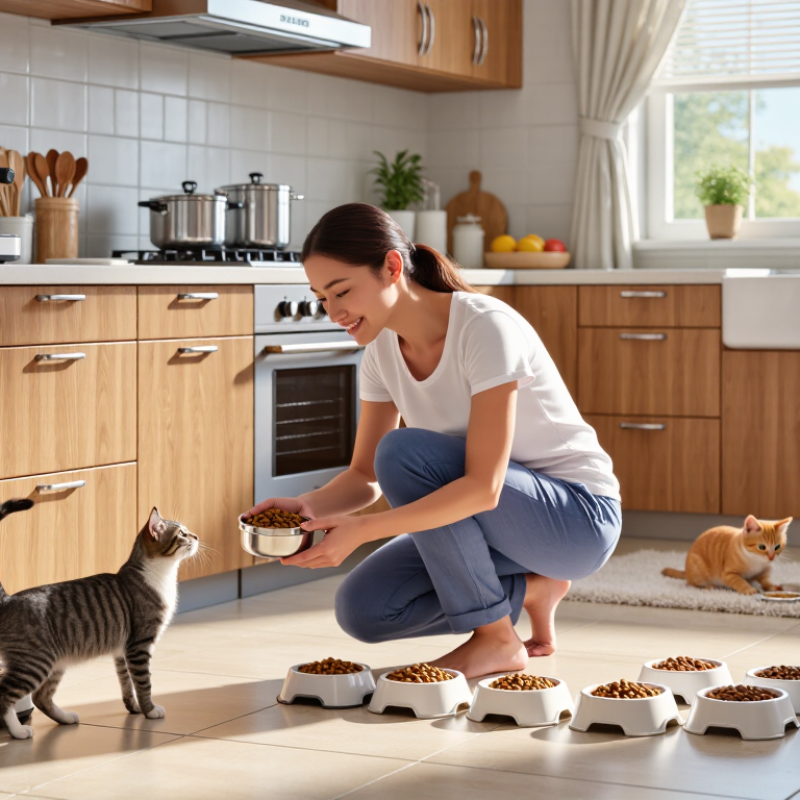
A cat’s ideal feeding schedule changes with age, weight, activity, and health. Kittens usually need three or four small meals daily. Their growing bodies use energy quickly. Healthy adult cats often do well with two measured meals, morning and evening. Some cats prefer smaller portions spread across the day. Timed meals can reduce overeating, while puzzle feeders add gentle mental exercise. Free feeding may suit a very active cat, but it can quietly cause weight gain.
Senior cats may need softer food, smaller meals, or easier access to water.
Dental pain, arthritis, diabetes, kidney disease, and thyroid problems can change feeding needs.
A cat that suddenly drinks more, refuses food, or loses weight needs veterinary attention. Food changes should happen gradually, usually over several days. I have noticed that neat schedules can fail when a cat’s appetite changes. Flexibility matters, but random portions do not.
Tips:
Cats differ in age, appetite, activity, and tolerance for routine. A single feeding plan rarely suits every household.
Free feeding can help a thin, self-controlled cat, but it often causes unnoticed weight gain. Two measured meals, morning and evening, suit many healthy adult cats. Three smaller meals may work better for cats that vomit after eating quickly. Small portions matter.
Some cats prefer four mini-meals, especially kittens or seniors with reduced appetite. An automatic feeder can support owners who work long shifts, but it needs regular cleaning and testing. Puzzle-feeder meals add movement and mental stimulation, although anxious cats may need a simpler start. A dawn-and-dusk schedule can match a cat’s natural activity peaks, yet indoor cats may still wake owners overnight. A mixed schedule, such as wet food at breakfast and measured dry food later, offers flexibility but requires careful calorie counting.
Veterinary nutrition guidance recommends measuring total daily calories rather than guessing by bowl size. Cats with diabetes, kidney disease, or other conditions need a veterinarian-directed timetable. Do not change their schedule suddenly. Watch body shape, stool quality, energy, and begging behavior for two weeks. A bathroom scale can reveal slow weight changes.
One practical mistake is treating an empty bowl as proof of hunger. It may reflect boredom, habit, or competition between cats. I would adjust portions gradually, not react to every meow. Reassess the plan when seasons, activity, medication, or household routines change.
A practical comparison of meal frequency for different cat lifestyles. The schedules use the cat’s full daily portion divided across planned meals.
Choosing portion sizes, meal frequency, and feeding times can make daily care calmer. Adult cats often do well with two measured meals, morning and evening. Some prefer three smaller meals, especially if they beg between meals. A timed feeder can divide the same daily portion into four or five servings. Free-feeding seems convenient, but it may encourage overeating in less active cats.
Portion size should begin with the food’s calorie guidance, your cat’s weight, age, and activity level. Measure food with a kitchen scale when possible. A bowl filled “by eye” can vary surprisingly. Kittens may need three or four meals daily because they grow quickly. Senior cats may need adjustments for dental discomfort, reduced activity, or medical conditions. Water should remain available, especially with dry food.
Watch the body, not just the bowl. You should feel the ribs under a thin layer of fat, but they should not be sharply visible. Weigh your cat every few weeks and adjust portions gradually. My own feeding routine became more accurate after recording leftovers and begging behavior. Still, appetite can change for many reasons. A sudden increase in hunger, thirst, vomiting, or weight loss deserves veterinary advice. Feeding at consistent times may help anxious cats, though some schedules need flexibility when workdays change. A schedule that looks perfect on paper may fail if your cat refuses one meal.
A feeding schedule should fit a cat’s body condition, age, activity, and medical history. For many healthy adult cats, two measured meals can support steady energy and reduce constant begging. Some cats do better with three or four smaller portions, especially if they vomit after eating quickly. A kitchen scale is more reliable than guessing with a cup. It also exposes an uncomfortable truth: small daily extras can quietly cause weight gain.
For weight control, measure the total daily calories and divide them across scheduled meals. Leave enough space between portions, and count treats as part of the day’s intake. Puzzle feeders can slow eating and add gentle mental activity, but they are not suitable for every cat. Monitor the waistline, rib coverage, stool, and energy level every few weeks. My own preference is to adjust gradually, because sudden reductions may create stress and intense food-seeking behavior.
Special dietary needs require closer supervision. Cats with kidney disease, diabetes, urinary problems, allergies, or digestive disorders may need a veterinarian-directed diet and timing plan. Some treatments work best when meals follow a consistent pattern. Never change therapeutic food abruptly without professional guidance. In multi-cat homes, feed cats separately and remove leftovers after a set period. A written log can reveal patterns, although it may feel tedious. If a cat stops eating, loses weight unexpectedly, vomits repeatedly, or seems unusually thirsty, contact a veterinarian promptly.
A feeding schedule should fit your cat’s body, appetite, age, and daily routine. Two measured meals may suit many adult cats, while three or four smaller portions can help cats that beg between meals. Timed feeding may also support weight control, but only when portions are measured. The Association for Pet Obesity Prevention estimated that 61% of surveyed cats were overweight or obese in 2022. That figure makes monitoring essential, not optional.
Check your cat’s weight every one or two weeks, using the same scale and similar conditions. Feel the ribs gently; they should be easy to find under a thin fat layer. The WSAVA body condition system uses a nine-point scale, helping owners and veterinarians track gradual changes. Watch the litter box, water intake, energy, and meal behavior. A suddenly empty bowl is not always a success.
Adjust slowly. Reduce or increase daily food by small amounts, preferably with veterinary guidance. Sudden restriction may create stress, persistent begging, or poor nutrition. Cats with diabetes, kidney disease, pregnancy, or other conditions need individualized plans. AAFP and ISFM feline guidelines emphasize nutritional assessment during routine care. I would not change a schedule after one hungry morning. Trends matter more. Still, my judgment can be wrong; weight loss, vomiting, or unusual thirst deserves prompt veterinary attention.
| Schedule | Typical Timing | Best Suited For | Main Benefits | Monitoring Points | Safe Adjustment Guidance |
|---|---|---|---|---|---|
| Two Measured Meals | One meal in the morning and one in the evening, about 8–12 hours apart. | Healthy adult cats with stable weight and predictable routines. | Simple to maintain; makes daily food intake easy to measure; supports consistent meal expectations. | Check body weight, appetite, stool quality, and whether the cat regularly leaves food uneaten. | Divide the cat’s total daily calorie allowance between the two meals. Change portions gradually over several days rather than making a sudden large reduction. |
| Three Smaller Meals | Morning, mid-afternoon, and evening. | Cats that beg between meals, eat too quickly, or do better with smaller portions. | Can reduce long gaps between meals and may help limit rapid eating and food-seeking behavior. | Confirm that the cat receives the same total daily amount, not three full meal portions. | Keep the daily calorie total constant while dividing it into three portions. Use a slow feeder if the cat continues to gulp food. |
| Four Small Meals | Approximately every 4–6 hours during the cat’s waking day. | Kittens older than weaning, very active cats, or adults that tolerate only small meals. | Provides frequent access to measured food and can be helpful when large meals cause discomfort or vomiting. | Watch for poor growth in kittens, persistent vomiting, diarrhea, or failure to finish meals. | For kittens, use age-appropriate complete food and veterinary growth guidance. For adults, divide the normal daily amount into four portions. |
| Timed Automatic Portions | Two to four programmed releases at fixed times. | Households with irregular schedules or cats that benefit from strict portion control. | Creates consistency and can prevent one person from accidentally feeding extra meals. | Verify that the device dispenses the expected amount and that the cat cannot access the entire supply at once. | Measure several portions manually before relying on the feeder. Recheck settings after power interruptions, cleaning, or food changes. |
| Puzzle-Feeder Meals | One or more daily meals offered through a food puzzle or forage toy. | Indoor cats that need more activity, mental stimulation, or slower eating. | Encourages natural foraging behavior and may lengthen eating time. | Ensure the cat can use the puzzle without frustration and that all food is recovered and eaten. | Begin with an easy puzzle and a small portion. Increase difficulty only when the cat succeeds consistently; count puzzle food within the daily allowance. |
| Mixed Wet-and-Dry Meals | For example, measured dry food at one meal and wet food at another. | Cats that accept both textures and households seeking variety or additional dietary moisture. | Combines the convenience of dry food with the higher water content of wet food. | Compare calories rather than volume because wet and dry foods have different energy densities. Refrigerate opened wet food and follow its storage directions. | Introduce the new texture gradually over about 7–10 days when possible. Remove uneaten wet food promptly; do not leave it out for extended periods. |
| Night-Time Split Feeding | A small evening meal followed by one measured overnight portion, with breakfast in the morning. | Cats that are most active at night or wake people for food. | Can better match feline activity patterns and reduce early-morning food-seeking. | Check that overnight feeding does not increase total calories or encourage weight gain. | Move part of the normal daily allowance to nighttime rather than adding calories. Use a timed feeder or puzzle feeder when safe and appropriate. |
How to choose: For most healthy adult cats, two or three measured meals are practical starting points. Kittens generally need more frequent meals, while cats with medical conditions may require a veterinary-prescribed schedule.
Monitor weekly: Track body weight, body condition, appetite, water intake, stool, vomiting, and activity. Adjust portions gradually and reassess after changes in food, exercise, age, or health.
Seek veterinary advice: Contact a veterinarian for sudden appetite loss, repeated vomiting or diarrhea, rapid weight change, increased thirst or urination, or difficulty managing a cat’s weight.
Kittens usually need three or four small meals daily. Their growing bodies use energy quickly. Serve measured portions, not one large bowl. Watch appetite and growth. The schedule may need revision.
Two measured meals, morning and evening, suit many healthy adult cats. Some cats prefer three or four smaller portions. Timed meals can reduce overeating. Measure, do not guess.
Free feeding may suit very active cats, but it can quietly cause weight gain. A bowl that stays full hides the daily intake. Scheduled portions offer clearer control. Convenience is not always healthy.
Weigh the total daily food with a kitchen scale. Divide it across scheduled meals. Count treats within the daily amount. Check the waistline, ribs, stool, and energy every few weeks. Reduce portions gradually.
Offer three or four smaller meals instead of one large serving. A puzzle feeder may slow eating and provide gentle mental activity. It may not suit every cat. Watch for frustration.
Senior cats may need softer food, smaller meals, or easier water access. Dental pain and arthritis can make eating uncomfortable. Place food and water on an easy-to-reach surface. Observe carefully.
Kidney disease, diabetes, urinary problems, allergies, and digestive disorders may require a veterinarian-directed diet. Some treatments need consistent meal timing. Do not change therapeutic food abruptly. Ask for professional guidance.
Contact a veterinarian if a cat suddenly refuses food, loses weight, vomits repeatedly, or drinks unusually large amounts. Changes in energy also matter. Keep a simple feeding record. Small clues can reveal bigger problems.
Feed cats separately when one steals another’s food. Remove leftovers after a set period. Use individual measured portions. This may feel inconvenient. It often makes eating patterns easier to understand.
A healthy feeding routine should reflect a cat’s age, health, activity level, and daily habits. Kittens often need smaller, more frequent meals, while healthy adult cats may do well with two measured meals per day. Older cats or those with medical conditions may require adjusted portions, softer food, or more regular feeding times based on professional guidance. There is no single answer to “what is the best feeding schedule for cats,” because the ideal routine depends on each individual animal.
This guide compares seven practical schedules, including timed meals, portion-controlled meals, and carefully managed free feeding. It explains how to select suitable serving sizes, meal frequency, and feeding times while supporting healthy weight control. Owners should monitor body condition, appetite, energy, digestion, and changes in eating behavior, then adjust the routine gradually when needed. Cats with special dietary needs should follow a plan recommended by a qualified veterinarian.

PawEase Feeder